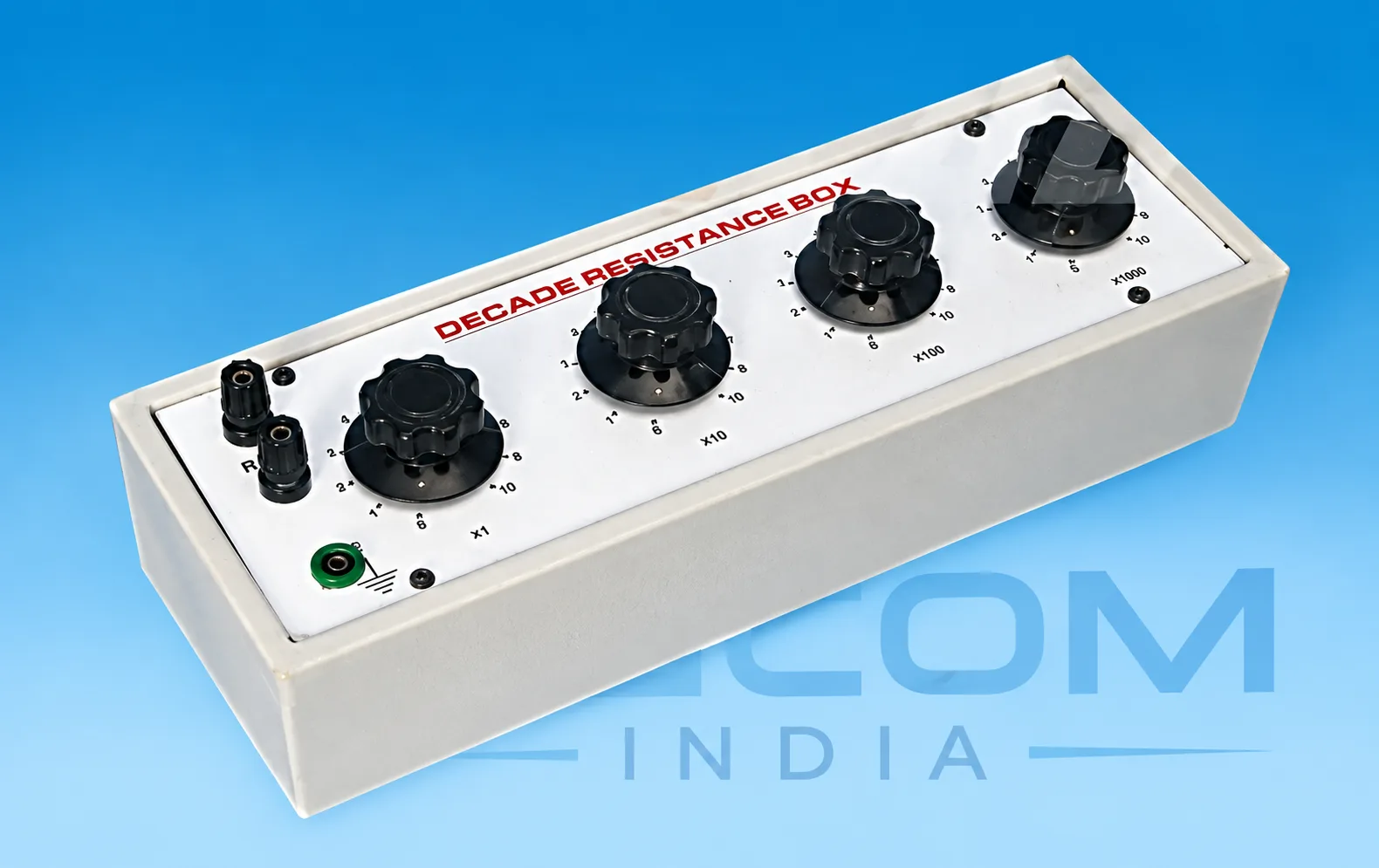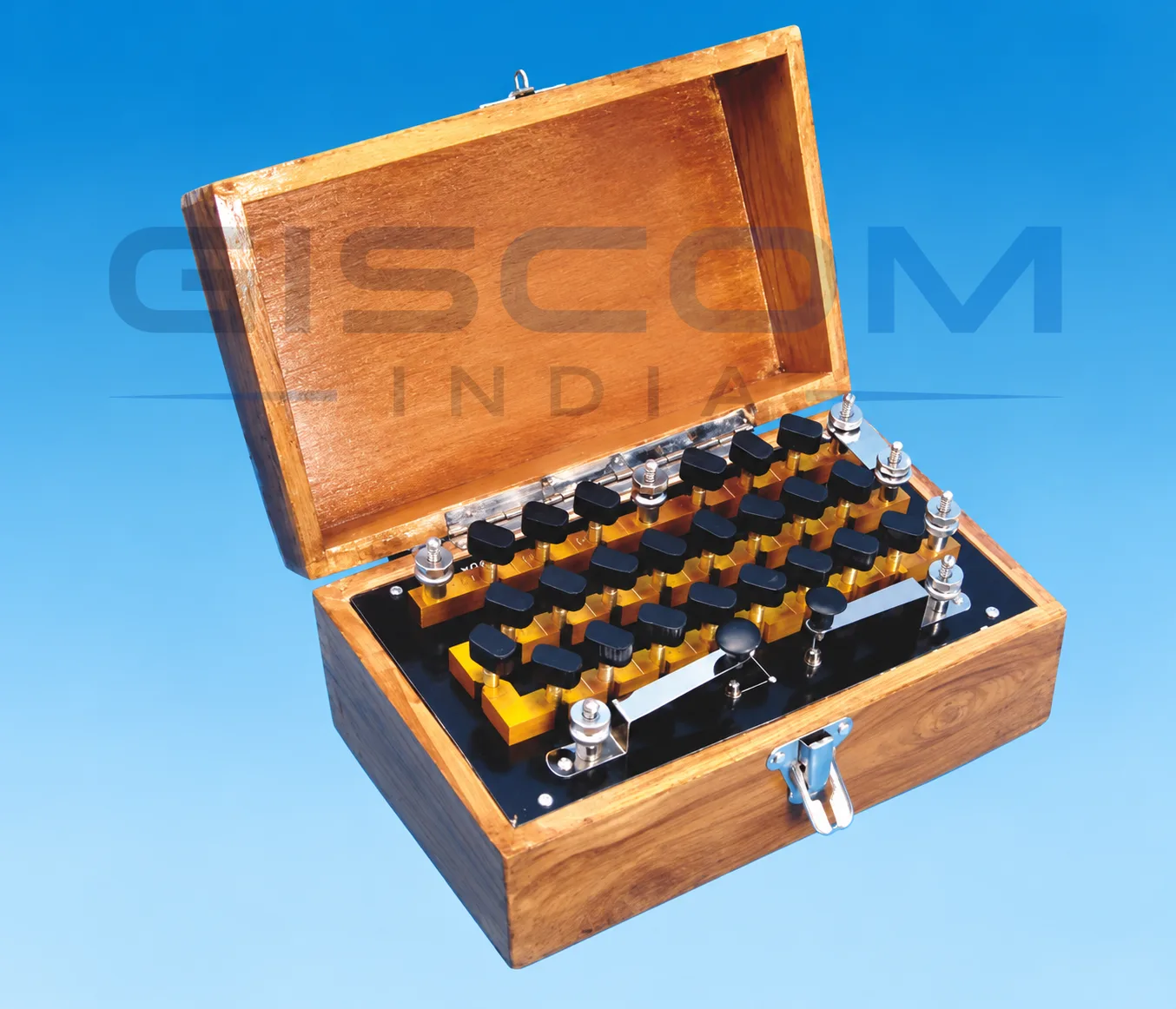

Catalogue No. – 16606 with 4mm socket terminals, supplied with jockey, available with single / double wire on polished wooden base [table id=16606 /]
Send an enquiry and we will quote for your quantity.
A potentiometer is a laboratory apparatus that is used to measure the potential difference (voltage) between two points in an electric circuit. It consists of a resistive element (a long wire or track), a sliding contact (also known as a wiper) that can move along the resistive element, and a fixed contact at each end of the resistive element.
When a voltage is applied to the two fixed contacts, a voltage gradient is created along the resistive element. By moving the sliding contact along the resistive element, the voltage at any point in the circuit can be measured relative to the voltage at the fixed contacts.
Potentiometers are often used in laboratory settings to measure the voltage output of a power supply, to calibrate other instruments such as voltmeters and ammeters, and to conduct experiments involving electrical circuits.
Leave your number and a specialist will call you with a quote for your requirement.
Our team will call you shortly with the best quote.