Products Categories Why GISCOM Contact Request a Quote →
Anatomical Model

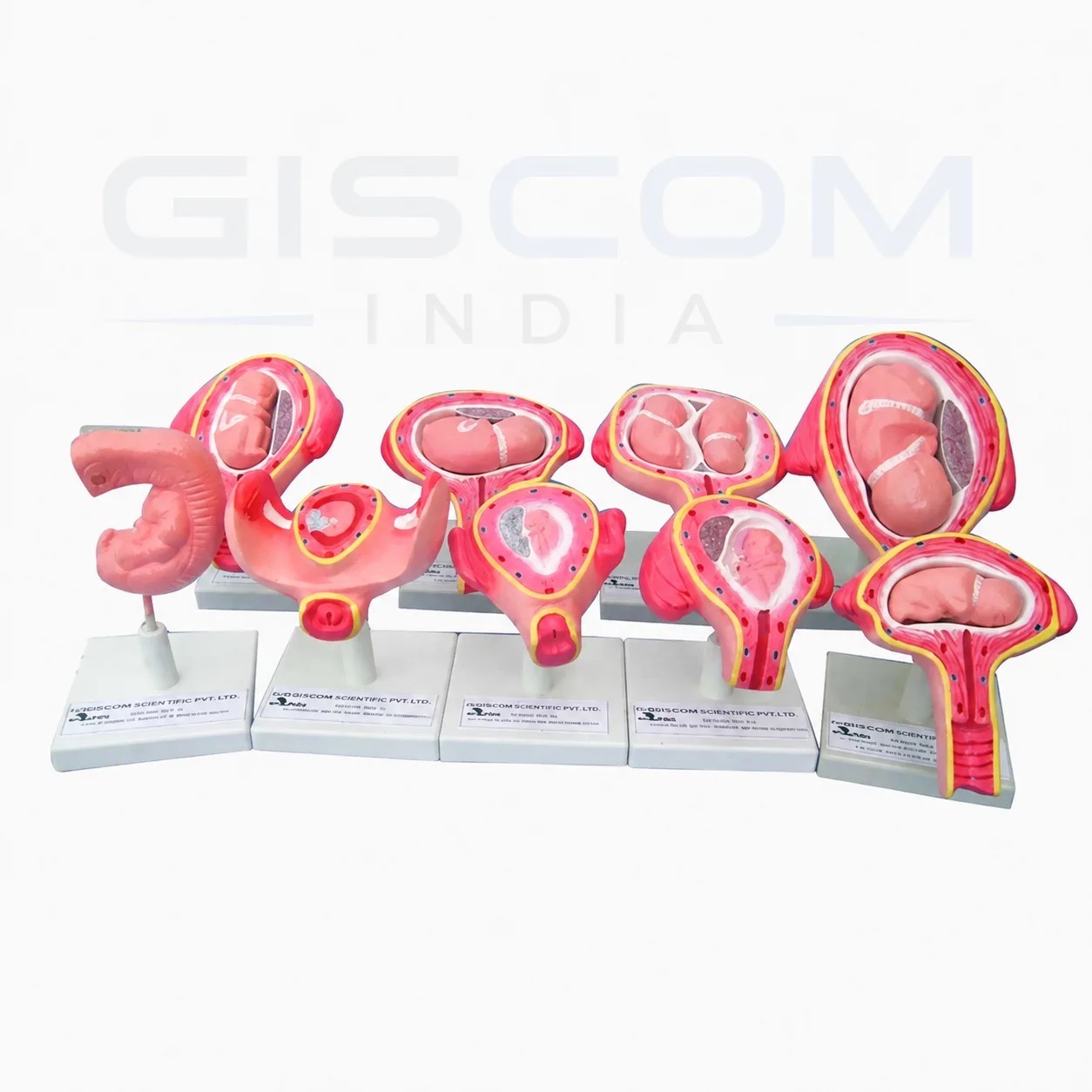
Human Development Stages

Model GI-2354 In stock

Essential for Biology and Human Sexuality Lessons. Various stages of fetal development are featured in one beautifully detailed set of eight life-size models, each a re-creation of the uterus with a fetus. Five of the models shows a fetus at different times during the gestation period: models 1-3 each correspond to the first three months of pregnancy, model 4 depicts the fetus in the fourth to the fifth month, and model 8 presents a seven month- old fetus. Model 5 shows the f...

Price on Request

Send an enquiry and we will quote for your quantity.

Enquire now

Detailed information

Human development occurs in distinct stages, from conception to old age. Below is an overview of the major human development stages:

1. Prenatal Stage (Conception to Birth)

  • Zygote (0-2 weeks): A fertilized egg undergoes cell division and implantation.
  • Embryonic Stage (3-8 weeks): Formation of major organs and body structures.
  • Fetal Stage (9 weeks-birth): Rapid growth and maturation of organs.

2. Infancy (Birth to 2 Years)

  • Reflexes such as sucking and grasping develop.
  • Rapid brain growth, motor skills (crawling, walking), and sensory development.
  • Emotional bonding and early social interactions begin.

3. Early Childhood (2-6 Years)

  • Development of language, coordination, and fine motor skills.
  • Social skills and imagination expand.
  • Basic independence in daily tasks like dressing and feeding.

4. Middle Childhood (6-12 Years)

  • Logical thinking and problem-solving abilities develop.
  • Academic learning and peer relationships become important.
  • Physical growth continues steadily.

5. Adolescence (12-18 Years)

  • Puberty occurs, leading to hormonal and physical changes.
  • Identity formation, emotional independence, and cognitive maturity.
  • Social interactions and peer influence play a significant role.

6. Early Adulthood (18-40 Years)

  • Establishment of career, relationships, and independence.
  • Physical peak in terms of strength and energy.
  • Family and social responsibilities grow.

7. Middle Adulthood (40-65 Years)

  • Gradual physical decline (metabolism slows, wrinkles, gray hair).
  • Career and family stability, focus on legacy and accomplishments.
  • Mid-life transitions and possible reevaluation of life goals.

8. Late Adulthood (65+ Years)

  • Aging leads to reduced strength, sensory decline, and potential health issues.
  • Reflection on life, wisdom, and emotional stability increase.
  • Retirement and lifestyle adjustments.
Get a quote

Enquire about Human Development Stages

Related products