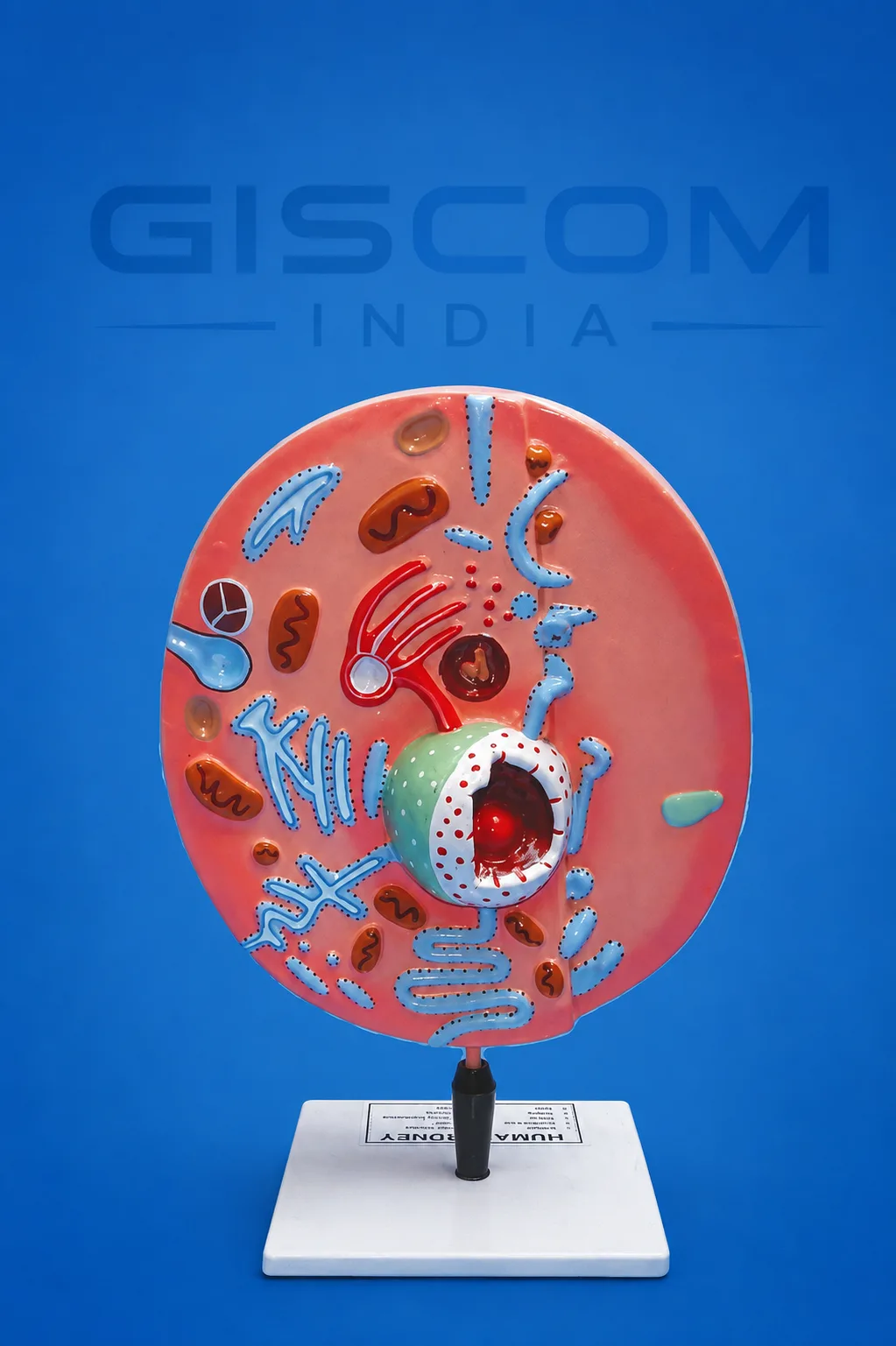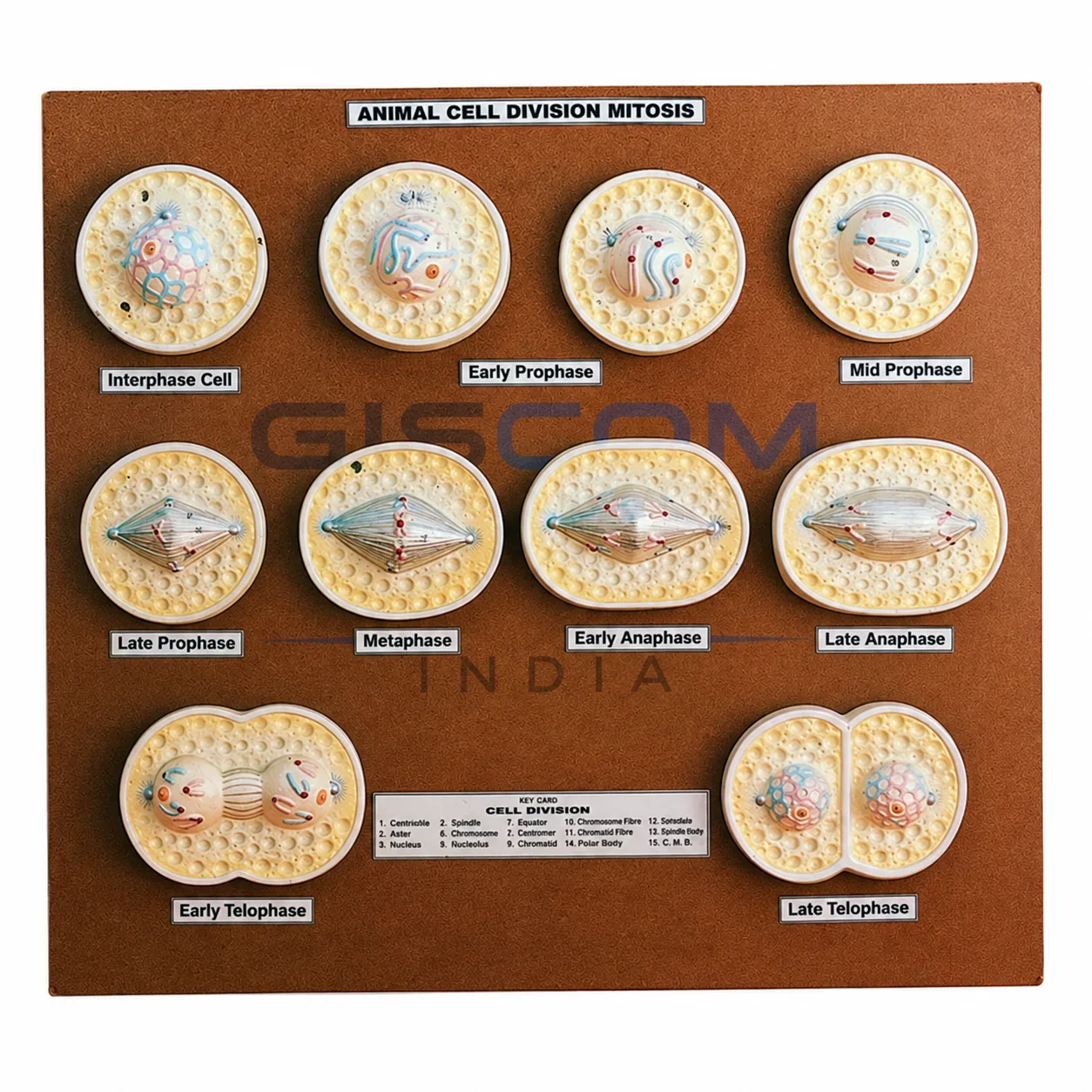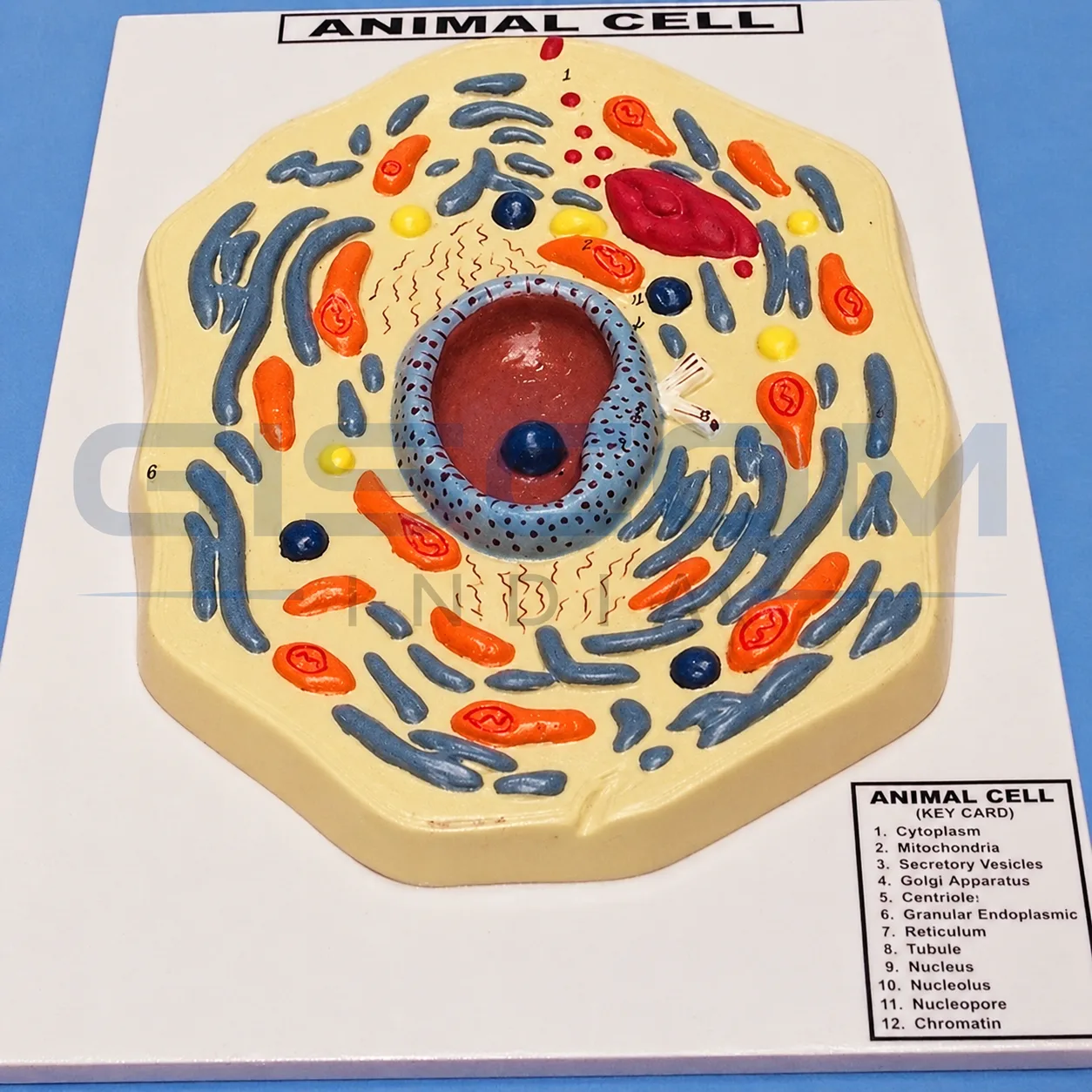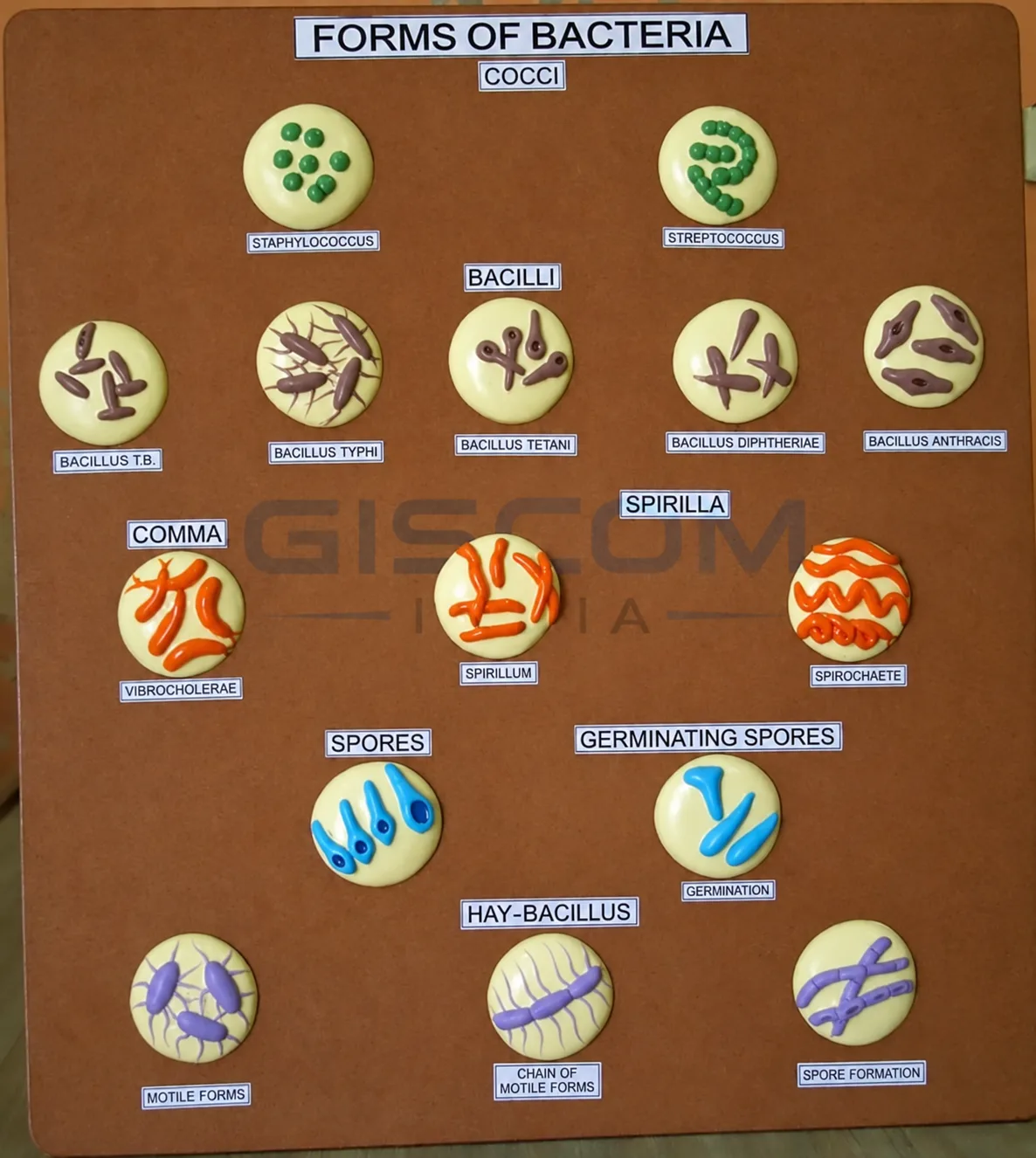
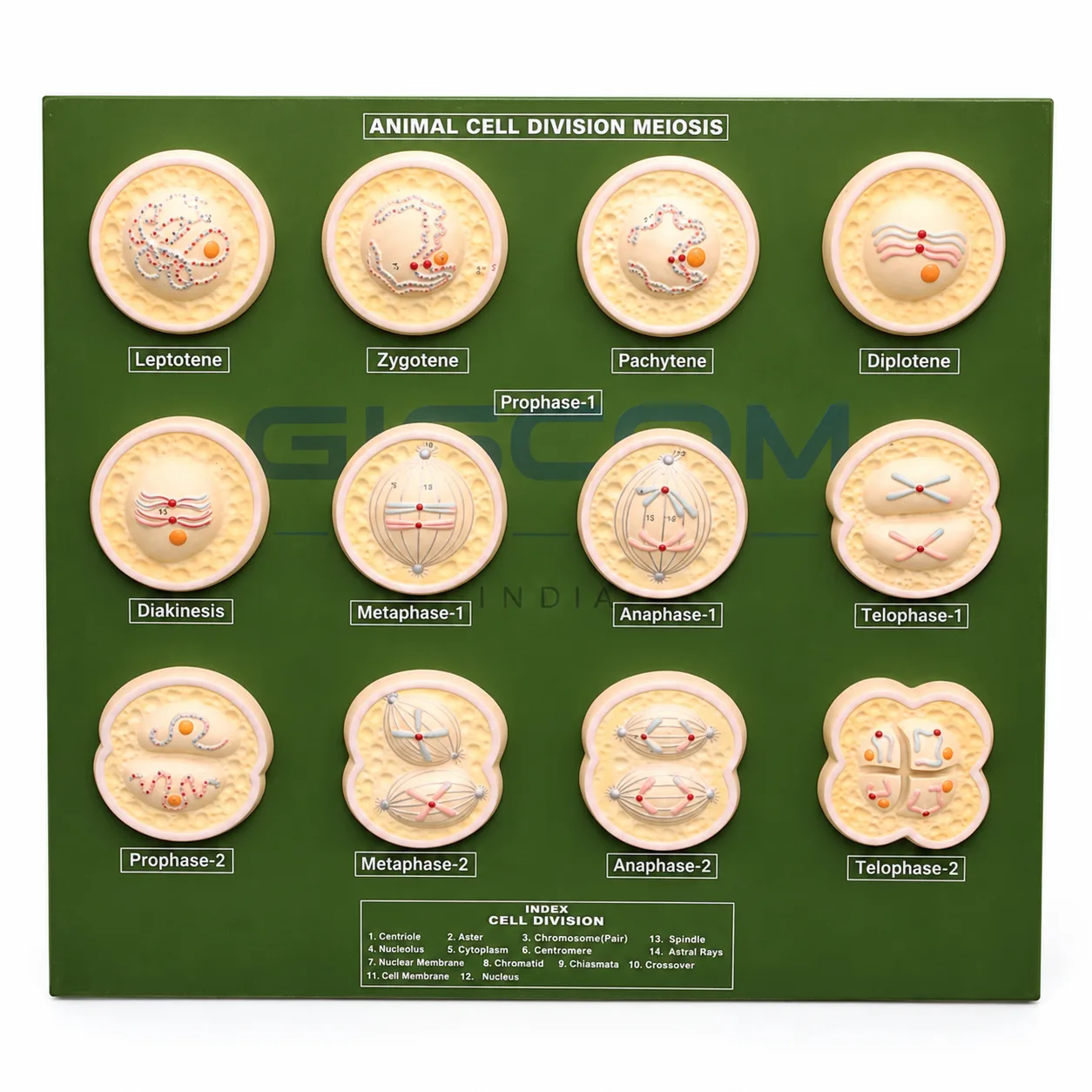
Clearly showing all stages of meiosis cell division in detail, beautifully coloured to show the details of chromosomes, as seen under the microscope. A set of 12 models, very useful for class-room, mounted on board with numbered Key Card. Board Size 50x45cm
Send an enquiry and we will quote for your quantity.
Animal Cell Division Meiosis is a type of cell division that results in the production of gametes, which are reproductive cells. Meiosis is unique because it reduces the number of chromosomes in a cell by half. This is important because when the gametes fuse during fertilization, they form a zygote that contains the full complement of chromosomes, which is necessary for normal development.
Meiosis occurs in two stages, Meiosis I and Meiosis II. During Meiosis I, the chromosomes of the parent cell are replicated and then lined up along the middle of the cell. The cell then divides in half, resulting in two daughter cells, each with a copy of each chromosome.
In Meiosis II, each of the daughter cells undergoes a second division, resulting in four haploid cells, each with half the number of chromosomes as the original parent cell.
Meiosis is crucial for sexual reproduction in many organisms, including animals. By reducing the number of chromosomes in each gamete, meiosis helps to ensure that each new organism formed through fertilization will have the correct number of chromosomes.
In summary, meiosis is a type of cell division that is important for sexual reproduction in animals and other organisms. By reducing the number of chromosomes in each gamete, meiosis ensures that each new organism will have the correct number of chromosomes for normal development.
Leave your number and a specialist will call you with a quote for your requirement.
Our team will call you shortly with the best quote.